


Every real estate professional has a love-hate relationship with paperwork. There’s that rush when a new deal comes together — followed quickly by the realization that you’ll spend hours sorting and copying property details into spreadsheets.
For years, this was just “part of the job.” But the truth is, it doesn’t have to be. Real estate automation has quietly been reshaping how agents, brokers, and transaction coordinators handle data.
Today, it’s possible to pull complete listing details from documents, tidy up sprawling contract packets, and deliver polished, accurate records without the headache.
This post explores how I transformed my workflow — from messy manual processes to a streamlined system that saves me hours each week.
The problem with manual management
Ask any real estate agent what takes up most of their time outside showings, and the answer will almost always include paperwork.
Collecting details might sound simple: price, address, bedrooms, and square footage. But in practice, it’s an endless stream of inconsistent PDFs, forwarded emails, and handwritten notes from owners.
I used to spend my mornings doing exactly that — copying numbers from MLS sheets, cleaning up property descriptions, and converting formats so they’d display neatly on my site. Even small errors, like an extra zero in the price or a missing zip code, could be embarrassing.
Some common headaches:
- Agents sending details in different formats (Excel, text, various forms).
- Listing photos mismatched with their corresponding properties.
- Updates slipping through cracks when sellers changed pricing or square footage.
- Hours wasted retyping information that already existed somewhere.
When you’re juggling several properties, these tiny inefficiencies pile up fast. I realized that if I didn’t find a better way, admin work would eventually consume my client time.
Smarter way to extract listing details
That’s where automation entered the picture. At first, I was skeptical — the idea of software “reading” documents and extracting data seemed risky. But the first time I tried it on a stack of forms, I was hooked.
Modern tools can process MLS PDFs, emails, or scanned files, and get structured information like:
- Property address, city, and postal code
- Listing and sale prices
- Bedrooms, bathrooms, and floor area
- Agent name and contact details
The process happens in seconds. I upload the forms, and the system maps the fields. Instead of manually typing the text everything, I review and approve. The results feed straight into my CRM and templates.
What surprised me most wasn’t just the speed — it was the consistency. Every listing followed the same format, no more uneven line breaks or half-filled rows.
Tip: Even the best real estate automation software occasionally misreads poorly scanned documents. I now do a quick spot check on extracted results before publishing. That ten-minute review beats an hour of reformatting any day.
By delegating this routine task, I not only saved time but also reduced the stress that came with last-minute scrambles.
Automation in real estate contract packets
If listing management is tedious, contract packets are a full-blown labyrinth. Each transaction generates dozens of files: purchase agreements, addenda, inspection reports, disclosures, etc. Multiply that by ten clients, and you have a mountain that feels impossible to climb.
I remember once juggling five active buyers and three sellers at the same time. My desktop looked like a graveyard of half-labeled PDFs. Sorting through them was an exercise in frustration. I’d cross-check endless versions — terrified of uploading the wrong file.
The deeper issue wasn’t my organizational skills; it was the sheer manual nature of the process. Each contract required identical but repetitive steps: open, verify, rename, merge, and send.
At one point, I timed myself. For every closed deal, I spent nearly three hours just cleaning up digital paperwork. Multiply that by a busy season, and it was days of lost productivity.
Automation doesn’t only help with extracting information — it can organize and refine entire document sets. Today, my contract packets practically clean themselves.
| Task | Tool | How It Helps |
|---|---|---|
| Sorting | Zapier | Moves new papers to pre-labeled folders based on client name and document type. |
| Naming | File Juggler | Renames PDFs with property details for consistent labeling. |
| Signature | DocuSign | Detects missing initials or signatures and alerts me before sending. |
| Assembly | PDF Candy | Combines multiple PDFs into a single, chronologically ordered packet. |
In one case, what used to take two hours per client now takes fifteen minutes. The system never forgets a document, never swaps a page, and never complains about repetitive tasks.
There’s also an unexpected side effect: peace of mind. Knowing that every paper is properly named, signed, and organized lets me focus on negotiations, updates, or marketing — things that actually grow the business.
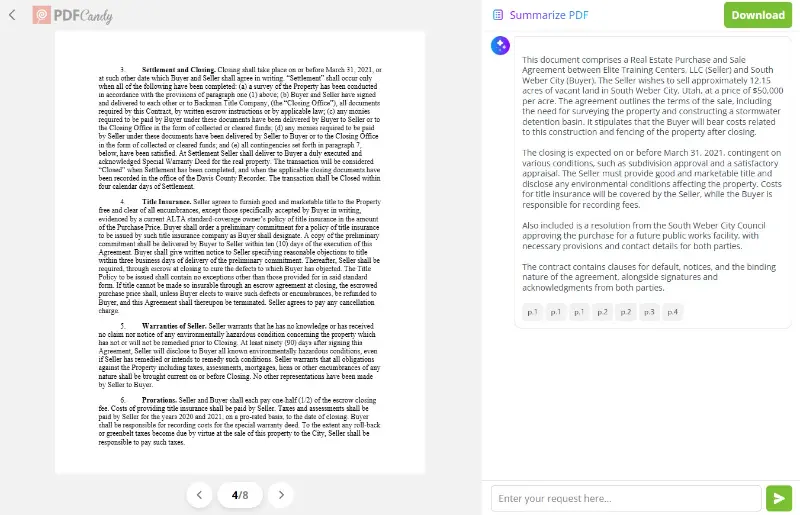
For anyone starting with automation, a good stepping stone is trying a summarize PDF tool to quickly scan long contracts and highlight essential clauses before sending them off. It’s not just convenient — it keeps you informed and reduces errors.
The human side of real estate automation
One misconception is that programs “replace” the human touch. In the sphere where trust and communication drive success, that’s a valid concern. But what I found is quite the opposite — it gave me more time to be personal.
By letting technology handle repetitive work, I can actually call clients back faster, schedule more in-person tours, and spend time crafting thoughtful follow-up messages. Instead of chasing missing pages in a contract packet, I’m focusing on building stronger relationships.
Automation for real estate, when used well, isn’t about removing human presence — it’s about clearing the clutter that gets in the way of meaningful interaction.
Conclusion
This industry will always be about people, but that doesn’t mean we need to drown in paperwork. Auto-extracting listing details and contract cleanup are small adjustments with a huge impact. They eliminate errors and save precious time.
Once you experience a smoother process, it’s hard to imagine going back to the old, manual way. Real estate workflow automation doesn’t just make the processes easier; it makes them more enjoyable.
So, whether you’re managing five properties or fifty, take the leap. Let technology tidy up the backend while you focus on the part that truly matters — helping people find their next home.