
Setting a code on PDF is critical to ensure that sensitive information is kept secure. Many users look for ways how to password-protect a PDF file without Acrobat. This is because it's not worth paying for a costly subscription for just one operation.
Luckily, many online PDF editors and desktop software offer solutions for both macOS and Windows computers.
This article discusses 5 methods of how to encrypt a PDF for various operating systems.
Option 1. PDF Candy
PDF Candy is a web-based platform that offers many instruments for working with digital documents, including the file protector. Using this way to secure PDFs without Abode Acrobat is fast, safe, and free!
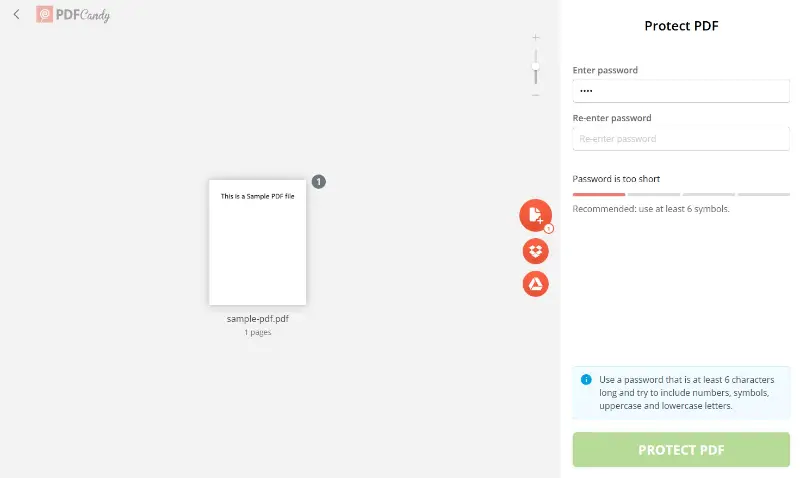
How to lock a PDF online
- Open the "Protect PDF" tool.
- Upload the paper you need to set a code on by clicking "Add file" or dragging and dropping it into the browser.
- Enter the key for your PDF twice and hit the "Protect PDF" button.
- After processing is finished, you can download the output or share it via a link.
Pros:
- A free way to defend a PDF on the go.
- The platform operates on any device - Android phones, iPhone Max, ProMax, Plus, Mini, and SE, Windows PCs, iMacs, MacBooks, etc.
- After PDF encryption is complete, all the uploads are automatically deleted within two hours (you can also do so manually right away).
- Fast and efficient processing that takes only a few minutes to complete.
- The interface is intuitive and straightforward. Even beginners will easily secure a PDF with this method.
- Supported by most modern browsers - Google Chrome, Safari, Firefox, Edge, and others.
Overall, PDF Candy is a good choice for anyone looking for a quick safeguard of their document with minimal effort.
Honestly, I love how simple this utility makes shielding PDFs. Students can lock up essays in seconds, and teachers can keep tests or lecture notes safe from modifications. Even admin staff can quickly encrypt forms or internal cases.
Moreover, the website offers additional tools that can make your life easier when it comes to managing digital files: add watermarks, edit your PDF, and more.
Option 2. PDF Candy Desktop
If you're looking for a PC app for Windows, consider trying PDF Candy Desktop as an encoding program.
The software works offline and serves as a good alternative to the Adobe Acrobat. Similarly to the web-based editor, this suite also offers a variety of extra features.
How to encrypt a PDF file with a password on Windows
- Download and install the utility for encrypting PDFs .
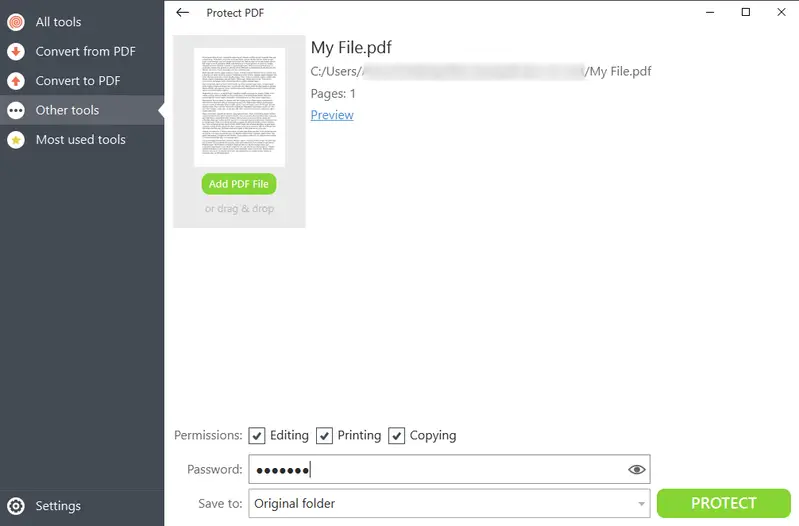
- Launch the program and select the "Protect PDF" option from the main window.
- Pick the PDF you want to safeguard and click "Open". Alternatively, drag and drop it into the working area.
- Enter a strong key that you would like to use in the text box provided and then press "Protect". You can adjust the "Permissions" by adding or removing check marks for "Editing", "Printing", and "Coping".
- Once the process is complete, your newly created PDF will be saved in the pre-defined location.
If you have forgotten the combination, you can try to unlock your PDF with the restoring instrument.
Pros:
- Reliable program with an extensive toolkit to work with PDFs.
- Allows to restrict access without relying on the internet connection.
Overall, this software provides a high level of security. By exploring the other instruments offered, like image extractor, you will boost your comfort and confidence working with PDFs.
Option 3. Preview
If you are a Mac user, you have the option to encrypt PDFs with the default application - Preview. After a few simple manipulations, you will shelter a file and share them with the necessary group of people.
How to password-protect a PDF without Acrobat on macOS
- Open your PDF with the Preview.
- Click "File" from the top menu bar, then choose "Export".
- Select "Permissions" on the dialogue box and set a password on the PDF twice to validate it.
- Hit "Apply" to confirm the changes and then "Save".
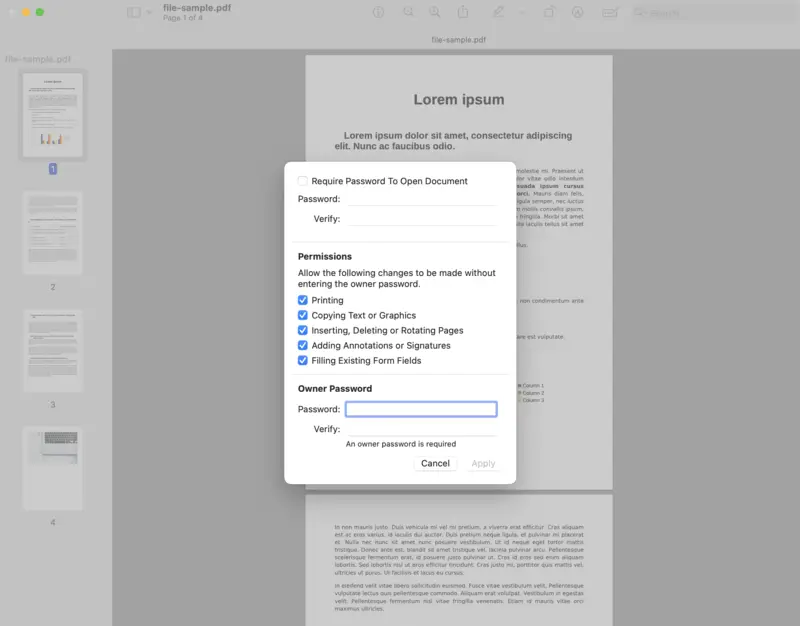
This method to secure a PDF is a convenient approach for iMac and Macbook. However, there are some pros and cons you should consider before picking it.
Pros:
- It is a free way to lock a PDF as the platform is already pre-installed on Mac computers.
- The encryption is quite strong, so your document will be secure from most attempts to access it without the password.
Cons:
- If you forget your key, there is no way to recover it.
Since the majority of programs for macOS are paid, this simple solution is a lifesaver when it comes to safeguarding important information. Moreover, since it's a desktop PDF utensil, you can rest assured that your papers are not shared with a third party.
Option 4. Microsoft Word
Microsoft Word also provides an easy and secure method for password-protecting PDFs without Adobe Acrobat. You can import the PDF into the program and the conversion to DOCX will happen automatically.
How to encrypt a PDF file using Microsoft Word
- Launch the archive in Microsoft Word.
- Go to "File", find "Save As" and select "PDF" from the drop-down menu.
- When prompted, click the "Options" button in the lower-left corner of the window.
- In the "Security Options" section, check the box next to "Encrypt with Password".
- Enter a combination of your choice and hit "OK".
- Export it as a PDF through the "File" menu.
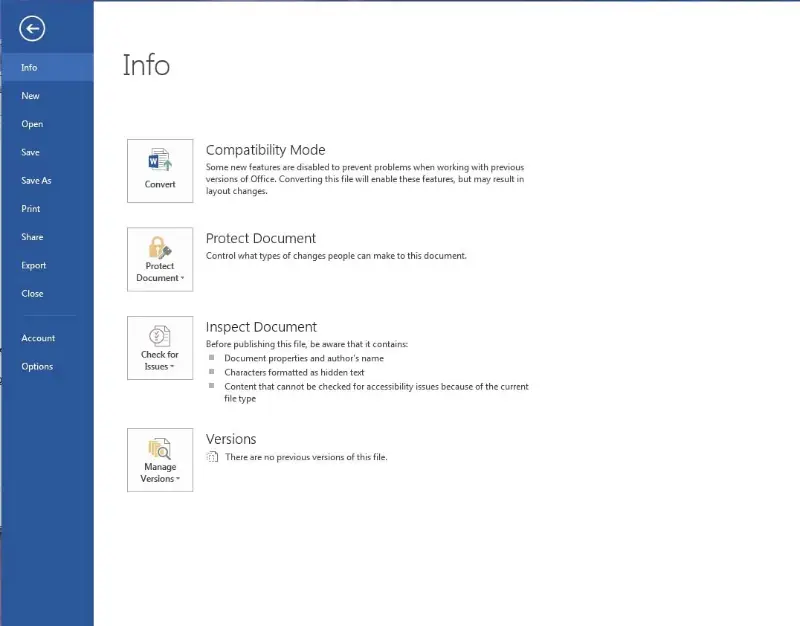
Keep in mind that to password-protect your PDF with this method, you must have your item saved in a compatible format. You can learn how to convert PDF to Word here.
Pros:
- Many users already have this program on their computers for other needs.
Cons:
- Limited PDF encryption options as the app's primary purpose is text editing.
Even though it's possible to complete the task with this software, it may not be the most intuitive option for securing a PDF due to less features.
Option 5. PDF-XChange Editor
PDF-XChange Editor provides advanced tools, allowing to safeguard drafts with passwords and limit access. It enables defining permissions for printing, editing, or copying content while utilizing AES.
How set password on PDF
- Open the utility and load the draft you want to protect.
- Access "Document Properties" from the "File" menu.
- Switch to the Security section.
- Select "Password Security" from the available options.
- Enable the option to require a code, then enter and confirm your chosen one.
- Save the settings with "OK".
The application supports both open and restrictions passwords, granting controlled entry to sensitive materials.
Pros:
- Supports digital signatures and permanent redaction of private content.
- Lightweight and fast, handling large files efficiently.
Cons:
- Interface can be complex for first-time users.
- Misconfigured permissions may block legitimate access.
Although some advanced features require a license and the UI may take time to master, the overall balance of security, functionality, and speed makes it a strong choice for managing papers.
FAQ for password-protecting a PDF
Why can't I encode a PDF?
Check the manual or description of the service's or program's settings. Not all PDF editors have such a tool.
Can I apply the same token for encrypting multiple PDF files?
This is certainly an option that will leave you to memorize fewer codes. However, choosing to lock several PDFs with the same key will jeopardize their security.
Will password-protecting a PDF have an impact on its quality?
No, if done properly, it should not affect its fidelity in any way.
Can the PDF credential be removed?
Yes, sometimes it is possible to unlock a PDF. This is why you need to come up with a strong combination to preserve your PDF as much as possible.
How to pick a good password to protect a PDF?
Creating a secure encryption for PDF files is an important step in safeguarding them from unauthorized access. Here are some tips to consider when picking a combination:
- Use a mix of letters, numbers, and special characters. Include upper and lower case alternation.
- Make the access phrase at least 8 characters long.
- Avoid common words or phrases.
- Don't incorporate your personal information, such as name, date of birth, etc.
- Refrain from setting the same codes for multiple accounts.
- Change your credentials regularly.
Following these simple tips will help you compose strong passwords that will protect your PDF documents.
How to not forget a catchword for a PDF?
Do you often forget the codes after you encrypt a PDF? Here are a few tricks to assist you in remembering it:
- Keep a physical copy of your key in a secure place.
- Incorporate memorable words or phrases to help you recall the combination.
- Take advantage of PIN managers like LastPass.
These suggestions will assist you in keeping the passcode accessible and fresh on your mind so you can unlock your PDFs whenever you need them with no problem.
How to test the password after protecting a PDF?
Once you know how to encrypt a PDF, it is important to make sure that everything works as intended. Here is how to verify the secret word for PDF is chosen well:
First, create a new paper with sample content and protect the PDF with a code of your choice.
Method 1:
- Open the document with a PDF editor or reader.
- Try entering an incorrect code and see if the paper will open.
- If it doesn't, the shield works properly and your data is secure!
Method 2:
- Open your file on any website for decrypting PDFs.
- Try using the tool to remove the key.
- If the service is unable to do this without the token, you have a strong combination.
Testing your PDF encryption is an essential part of keeping your information safe. Make sure to do it every time you set a password on the PDF with sensitive information for the highest level of security.
Encrypt a PDF without Acrobat: conclusion
Now you know several methods of how to password-protect a PDF file without Acrobat.
Choose an online service or desktop software from our list and secure your sensitive documents in just a few clicks.