
Being a paralegal means spending way too much time digging through endless case files, hunting for the important stuff. But now, with a few smart AI PDF tools on my side, I can summarize doc's key points without delay and still catch all the details that matter.
So, in this article, I’ll walk you through how these clever solutions make dispute analysis faster and, honestly, a lot more accurate. Ever since I started using them, my workflow feels smoother, and I actually understand complex documents better, all without the usual headache.
The Rising Challenge: Volume and Complexity
The judicial world today drowns in paperwork. Paralegals don’t just juggle contracts - they’re buried under regulatory filings, internal memos, endless emails, expert reports. For most cases, we’re not talking about a handful of pages, either. Hundreds, sometimes thousands, spill across every matter.
And this mountain of documents brings its own headaches:
- Repetitive manual review. So many of these files recycle the same phrases, clauses, or data. It’s like déjà vu - scanning, extracting, and double-checking similar info over and over.
- Time crunch. Deadlines for discovery, due diligence, or agency submissions don’t care how much you have on your plate. Rushing through a massive assessment means people get tired, mistakes slip in, and little details get lost.
- Human limits. No one can stay razor-sharp reading dense forensic text for hours. Research shows we’re all more likely to omit crucial issues when slogging through long, technical paragraphs. It’s how our brains work.
That’s where PDF AI-powered summarizer steps in. It cuts down on the busywork, speeds up the whole process, and helps catch things individuals might drop.
AI PDF Tool Adoption
Here’s what’s really going on:
- In 2025, LegalOn Technologies found that AI use for deal evaluation shot up 75% from the previous year. Fourteen percent of teams were already employing AI, and another 64% were in the process of testing or rolling them out.
- About [55% of lawyers]((https://www.allaboutai.com/resources/ai-statistics/ai-in-law/) now rely on AI for reviewing and summarizing documents. It’s quickly becoming a must-have.
- AI isn’t just hype here. It can slash inspection periods by as much as 75%. What used to take days now gets done in a few hours.
- Pros say these instruments give them back dozens of hours each year - time they once spent slogging through manual reading.
Advantages of AI PDF summary
Using AI PDF analyzer to outline case files changes the whole game for teams. Here’s why:
- Quickly zeroes in on what matters: Automation spots key details - who’s involved, dates, duties, risky clauses, and any contradictions - then lays it all out in a clear brief.
- Handles big batches with ease: These tools chew through dozens, even hundreds, of papers at once. That’s a lifesaver during massive discovery projects or when examining piles of contracts.
- Maintains consistency: AI utilizes the uniform standards, so you don’t get random results based on who’s doing the appraisal.
- Frees up precious time: By digitizing the slog of the first read-through, paralegals skip straight to the thinking, analyzing, and building strategy instead of reading the same thing over and over.
- Smart triage: The AI flags anything weird, urgent, or risky, so people know exactly where to jump in first.
Still, let’s be honest - smart technology isn’t perfect. This PDF summary is a starting point, not the final word. You still need people to double-check, catch the subtle stuff, and turn raw data into legitimate insight.
Limitations and Considerations
AI summarize file utensil is changing the game, but knowing where it falls short keeps things in check:
- Interpretive challenges: AI doesn’t get statutory nuance, intent, or tone the way people do. It might neglect the bigger picture when materials connect. That’s where you step in - you read between the lines, see the strategy.
- Omissions and errors: Sometimes machine learning systems skips over important clauses or says something’s an obligation when it isn’t. It might blow past contradictions, too. Bottom line: a trained professional has to proofread the work.
- Data privacy risks: If you upload sensitive client reports to a cloud AI? You could be risking confidentiality. You need to pick secure, compliant platforms.
- Audit needs: Paralegals have to keep clear records: originals, what the intelligent systems spits out, and the final, human-reviewed version.
- Ethical responsibility: At the end of the day, pros are on the hook for getting assets right. AI’s an instrument, not a replacement for real judgment.
Bottom line? PDF AI tool is here to stay. It’s not just a cool demo anymore - it’s a practical way to get through piles of agreements without drowning in paperwork.
Practical Use Cases
AI summarization steps in and makes a difference with some of the most common tasks. Here’s how it plays out in practice:
| Scenario | Manual | AI | Benefits |
|---|---|---|---|
| Contract study. | Read every treaty, underline important clauses, pull out obligations by hand. | Upload a stack of pacts; AI grabs the parties, key details, red flags, deadlines. | Faster evaluations, consistent results, fewer mistakes |
| Discovery analysis. | Go through depositions, pleadings, witness statements one at a time. | Sums units up, spots inconsistencies, calls out the big stuff. | Saves hours, helps you focus, less burnout |
| Regulatory filings. | Mark up conformance duties and endpoints yourself. | Finds obligations, target dates, references; builds your checklist. | Tracks compliance quickly, keeps summary of PDF from AI neat, speeds things up. |
| Due diligence. | Sift through corporate records, covenants, IP files on your own. | Creates structured outlines, searches anomalies, builds risk matrices. | Faster risk checks, scalable workflow, sharper reports. |
Integrating AI into Paralegal Workflow
- Document Triage. First, I go through the stack and decide which items the AI can process and which ones require my immediate attention.
- Batch Upload. Next, I feed the selected papers into the automated intelligence - either to extract essential details or to generate concise overviews.
- Verification. Then I examine the AI’s output, cross-check it with the original materials, clarify any ambiguities, and ensure nothing is overlooked.
- Integration into Strategy. Once I’m confident in the PDF summary, I apply it - drafting memos, preparing briefs, and shaping our approach to the proceeding.
- Record-Keeping. I maintain an organized log of everything: the originals, the AI-generated results, and my own approved versions. This ensures a transparent trail if anyone needs to audit our work.
Tool Selection
| Instrument | Examples | Use Case | Pros | Cons |
|---|---|---|---|---|
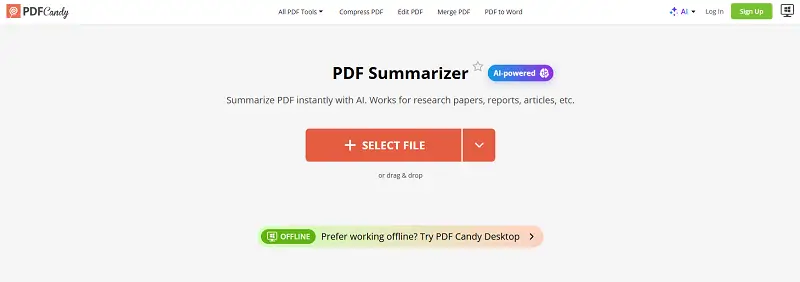
| Lightweight App | PDF Candy | Triage, preliminary summaries, converting scanned PDFs. | Fast, simple, easy to utilize. | Limited constitutional-specific features, basic AI capabilities. |
| Generalist PDF AI Summarizers | ChatGPT, Claude, Bard | Collecting depositions, witness statements, general review. | Flexible, handles unstructured text, quick output. | Limited understanding of judicial terms, possible inaccuracies. |
| Legal-Specific AI Platforms | Luminance, Kira Systems, LawGeex | Contract scrutiny, discovery, regulatory compliance | Clause detection, conformity monitoring, secure. | Higher cost, requires training, complex setup. |
Conclusion
PDF AI tools have totally changed how lawyers work. Suddenly, that mountain of documents isn’t so scary. Now, you get to spend more time actually thinking through cases and helping your team where it counts.
AI is just an instrument, not a replacement for people. You still need sharp human judgment, a sense of ethics, and the ability to see the big picture. So, the future here isn’t only about speed. It’s about being smarter, digging deeper, and making support more strategic than ever.