
Modern HR departments are moving beyond spreadsheets and manual digital document handling.
With tools for resume parsing, automated offer letter creation, and digital onboarding packets, teams can focus less on repetitive paperwork and more on building meaningful connections with candidates.
These innovations not only cut administrative time but also enhance compliance and overall hiring experience — transforming HR into a true strategic partner within any organization.
What is HR automation?
Human resources automation refers to the use of software and digital tools to handle processes.
Instead of relying on manual entry or paperwork, these systems streamline everyday tasks. This saves time, improves accuracy, and allows professionals to focus on people rather than procedures.
Core idea
At its heart, HR automation solutions are about efficiency and consistency. By digitizing repetitive steps, companies reduce human error and accelerate everything from recruitment to employee management.
Common areas it covers
- Recruitment: Scanning resumes, ranking applicants, and scheduling interviews.
- Onboarding: Creating welcome packets, assigning training, and managing form submissions.
- Payroll & Benefits: Handling calculations, approvals, and updates with minimal oversight.
- Compliance Tracking: Monitoring certifications, policy acknowledgments, and documentation deadlines.
- Performance Management: Gathering feedback, tracking goals, and generating reports in real time.
Imagine a mid-sized firm hiring several new employees at once. Instead of HR manually entering each candidate’s data, the system extracts information from resumes, prepares offer letters using company templates, and compiles onboarding materials automatically.
What once took hours — or days — happens in minutes.
Resume parsing
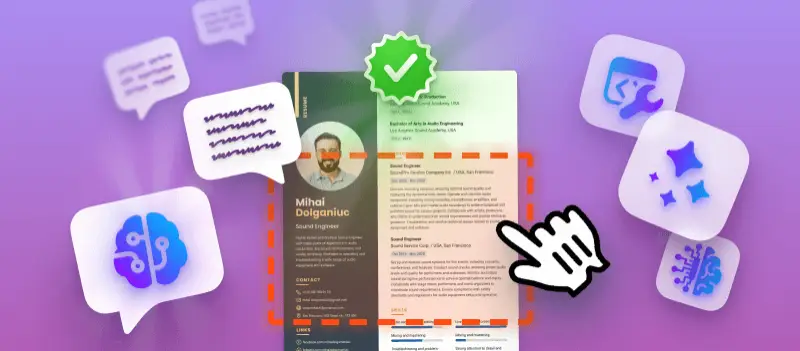
Resume parsing is the HR automation process of converting unstructured applications — often in formats like PDF, DOCX, or plain text — into structured, searchable information.
This allows software to quickly interpret details such as skills, education, and experience without manual review.
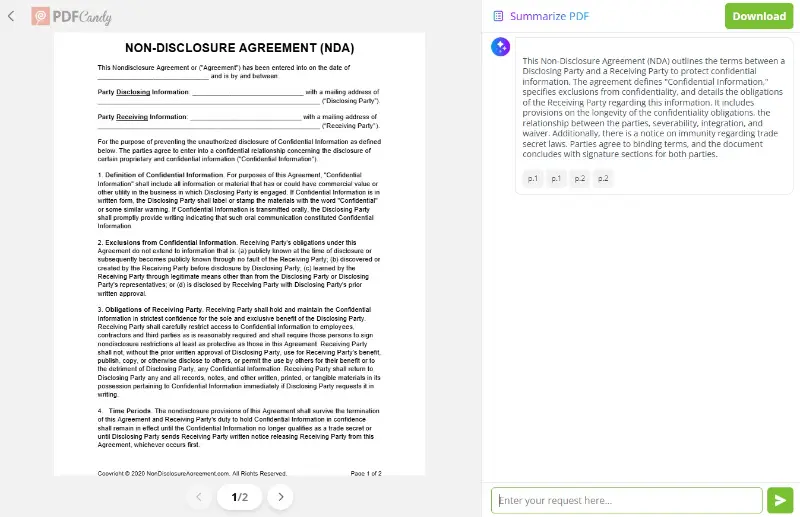
If you’re dealing with long or complex data outside of recruiting, a summarize PDF tool uses similar logic. It extracts and condenses content into key insights.
The same approach that simplifies hiring can help teams quickly understand reports, proposals, or policy documents without reading every page.
How does this process work?
- Data extraction: The system scans each resume and identifies relevant fields (name, contact, qualifications, job titles, etc.).
- Classification: Information is sorted into categories like work history or certifications.
- Integration: Parsed elements are transferred into an applicant tracking system (ATS) or database, making it easy to read, search, compare, and rank candidates.
| Step | Action | Example |
|---|---|---|
| 1 | Extract keywords | “Project Management,” “AutoCAD,” “Salesforce CRM” |
| 2 | Organize info | Education → University of Chicago, MBA 2020 |
| 3 | Match to role | Person meets 90% of expected competencies |
Why is it valuable?
- Reduces manual data entry and human error
- Speeds up candidate screening and shortlisting
- Improves matching accuracy between applicants and job requirements
- Allows recruiters to focus on interviews and relationship-building
In essence, resume parsing turns a pile of papers into actionable hiring intelligence, cutting through clutter so teams can make decisions faster and more confidently.
Offer letter generation
When a candidate reaches the final stage, HR automation tools can create personalized job offer letters in seconds. These combine predefined templates with specific data — eliminating repetitive editing and ensuring every document aligns with company policy.
What does it do?
Automated offer generation tools pull details such as:
- Applicant's name and position
- Compensation and start date
- Reporting manager and department
- Contract type and work location
Then, they insert that data into the official template, generate the file (PDF or digital signature format), and share it directly with the person.
Candidate selected → HR reviews terms → System fills template → Offer sent → Worker e-signs
Key benefits
- Ensures consistency in tone and layout across all offers.
- Reduces approval delays with instant generation.
- Maintains legal and policy compliance automatically.
- Frees staff to focus on engagement, not paperwork.
Onboarding packet assembly
A smooth start defines an employee’s entire experience.
HR process automation creates and distributes all materials new hires need — without the piles of paper or endless email threads. Instead of manually collecting contracts, policy forms, and documents, the system compiles everything into one digital package tailored to each role.
Components typically include:
- Employment contract
- Tax and payroll forms
- Company handbook
- Training materials or e-learning modules
- Access credentials and IT setup instructions
How does this process flow?
| Stage | Description | Outcome |
|---|---|---|
| 1. Trigger | A candidate accepts the offer | HR system initiates packet creation |
| 2. Assembly | Documents and resources are pulled from templates | Personalized onboarding kit is formed |
| 3. Delivery | Sent via secure portal or email link | New hire reviews, signs, and submits digitally |
In essence, it ensures that new people walk in prepared, confident, and connected. HR teams can focus on making the first day memorable, not managing folders.
Integration and optimization
Automating human resources doesn’t work in isolation — it thrives on connectivity.
By linking resume parsing, offer letter generation, and onboarding packet assembly into a unified ecosystem, companies create a seamless flow of data across the entire employee lifecycle.
When HR platforms communicate with tools like ATS (Applicant Tracking Systems), HRIS (Human Resource Information Systems), and payroll software, every step — from application to orientation — happens without manual transfer or duplication.
Candidate applies → Resume parsed → Offer generated → Onboarding initiated → Data synced with payroll
Each stage feeds the next automatically, ensuring accuracy and eliminating redundant entry.
Benefits at a glance: comparison table
| Category | Impact |
|---|---|
| Time Efficiency | Faster handoffs between recruiting, HR, and finance teams |
| Accuracy | Fewer input errors and duplicate records |
| Transparency | Real-time progress tracking across departments |
| Collaboration | Streamlined communication between managers and IT |
| Compliance | Up-to-date documentation synced in every connected system |
Real-world illustration
A healthcare network in Boston integrates its ATS with payroll and compliance tools. As soon as a nurse accepts an offer, her details populate across HRIS and other systems. Her training plan is assigned automatically, and onboarding begins. No spreadsheets, no delays, no lost forms.
Conclusion of automation in hiring
HR automation isn’t replacing human specialists — it’s empowering them. By streamlining resume review, offer preparation, and onboarding administration, technology allows professionals to work smarter, not harder.
The result is a faster, more consistent, and more human-centered hiring journey that benefits both sides of the desk.

(1).webp?w=420&h=184)
.webp?w=420&h=184)