

Have you ever been asked to put a wet signature and wondered "What is a wet signature?"
This is one of the oldest and most reliable forms of authentication and has been exploited for centuries. However, many people and even companies abandon physical signatures in favor of online endorsement.
In this article, we'll tell you about all types of consents including wet signatures, and when you can and should use each of them.
What is a wet signature?
Having an ink-based approval is required for some items by law and can serve as confirmation for agreements, contracts, wills, deeds, etc. It is a written proof that the signer has agreed to the document's contents.
When affixing a physical inscription, both parties have to be present. The process of creating a wet mark is relatively simple:
- It might be necessary for the signer to provide a passport or driver's license to confirm the identity.
- Both sides sign their names with a pen on the designated line on the page.
- Once complete, they will need to initial each page, and then make copies for everyone involved.
Pros:
- It is legally binding and valid in court proceedings.
- It provides both parties with proof of authorization and consent.
- It is recognized worldwide.
Cons:
- It requires a physical presence to make a wet signature.
- It may be time-consuming if multiple people need to sign one material.
What kinds of signatures are there?
A signature is a mark or a symbol used to signify one's agreement or approval. Different initials exist for various cases.
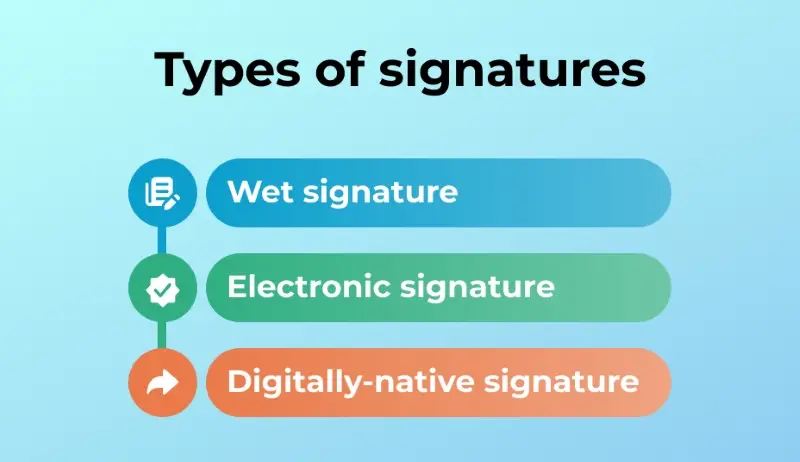
Wet Signature
A wet signature is a handwritten or physical authorization written with ink on paper. It necessitates a pen and is regularly employed in legal deeds.
Physical signatures remain in widespread deployment today even though some people tend to create a paperless office.
Electronic Signature
An electronic signature is a digital mark or indication that confirms approval of an online paper. You can sign documents online via a mouse or touchpad. It is also possible to scan your wet signature to use it as an electronic one.
E-signatures are generally employed for signing online forms.
Digitally-Native Signature
A digitally-native initials are a form of electronic signature. It relies on biometric authentication methods such as fingerprints, voice, or facial recognition to verify an individual's identity.
Table comparing these 3 types of signatures across various criteria:
| Criteria | Wet Signature. | Electronic Signature. | Digitally-Native Signature. |
|---|---|---|---|
| Definition | A handwritten signature using ink on paper. | A digital representation of a signature. | A cryptographic signature created and verified digitally. |
| Legality | Universally accepted in most jurisdictions. | Legally binding in many countries (e.g., E-SIGN Act, eIDAS). | Legally binding and compliant with strict digital signature laws (e.g., eIDAS). |
| Security | Susceptible to forgery and tampering. | Moderate security, can be copied or tampered with if not properly managed. | High security, adopts encryption and digital certificates to prevent tampering. |
| Verification | Manual affirmation required. | Automated proof possible but often basic. | Automated and highly reliable evidence with enciphered methods. |
| Implementation | Requires physical presence and paper handling. | Can be implemented via various digital platforms (e.g., email, PDF). | Requires a digital platform with protective capabilities. |
| Convenience | Less convenient, requires physical documents. | More convenient, can be signed remotely. | Most convenient, entirely digital and remote-friendly. |
| Cost | Costs related to paper, printing, and physical storage. | Lower cost, mainly related to digital platforms. | Initial setup can be costly, but minimal ongoing costs. |
| Use Cases | Traditional contracts, legal documents, personal deeds. | Business transactions, e-commerce, internal company approvals. | High-security settlements, government manuals, financial services. |
These kinds of signatures gain traction because of their improved security capabilities.
What is an electronic signature?
An electronic endorsement, also known as an e-signature, is a virtual reproduction of a person's intent to sign a deed. It serves to legally bind a person to a contract or agreement and provides an extra layer of security and authenticity.
Unlike a wet signature, which requires ink and paper, an electronic one is created using technologies. This type of signature is now accepted in most countries around the world.
Many services offer the ability to add an electronic signature.
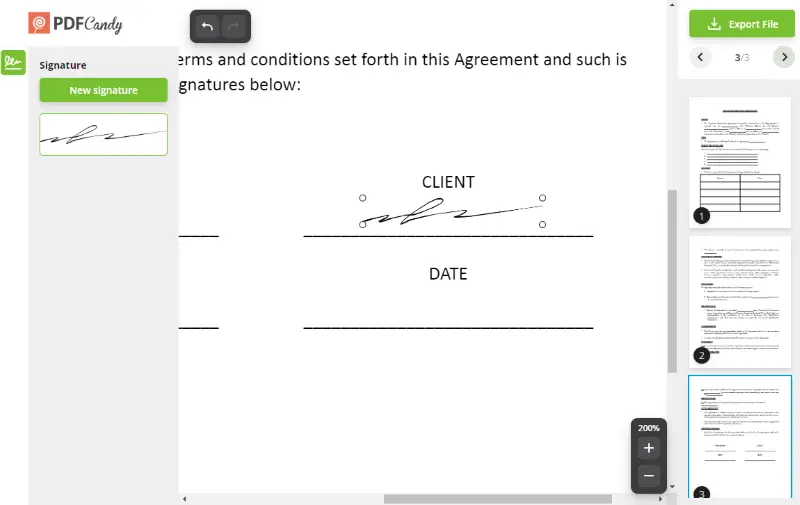
How you can sign a document online:
- First you need to convert your file to PDF if it isn't in this format already.
- Upload the converted PDF from the device, Dropbox, or Google Drive to the signature creator.
- Click "New Signature". Use "Text" to type your name, "Draw" to freehand depict the signature, or "Image" to upload a picture to utilize as your identifier.
- Place your signature on the page and press "Export File".
- Download the signed PDF to your device, upload it back to cloud storage, or create a shareable link.
Pros:
- Way faster than messing with notes and pens.
- Super easy to send to anyone, anywhere—no snail mail drama.
- Good for the planet—less paper trash piling up.
- You’ll save some serious bucks—no printing or mailing headaches.
Cons:
- Some legal forms still want that good old handwritten signature.
Overall, online document signing is an efficient way for companies to streamline processes while ensuring the security of agreements and deals. With the right technology and tools in place, businesses can benefit from the reliability and trust that this form of signature offers.
What is a digitally-native signature?
This is a kind of electronic one that involves advanced cryptographic techniques. This makes it difficult for others to impersonate the signer and provides strong authentication.
Digital signatures are used in many applications such as for signing contracts, sending emails, transferring funds, and verifying identities.
Why are there so many different signatures?
Depending on the document's purpose, different types of signatures may be necessary.
- For example, if you're signing a form for your employer or a government agency, they may accept electronic signatures or typed names. This is usually sufficient for making changes to banking information or tax filings.
- In certain cases, a notarized signature with ink may be required. This means the signature must be stamped with the seal of an authorized Notary Public. Notarized items are generally used when transferring real estate properties or establishing power of attorney.
It is critical to understand what type of signature is required for the situation at hand when dealing with legal documents. Creating a digital signature is accepted in many cases. However, regarding sensitive matters or transactions involving large sums of money, wet signatures remain the preferred method of authentication.
When do I need a wet signature?
Physically signing is legally valid and is a frequent practice for important papers. This includes:
- Contracts;
- Loan applications;
- Adoptions;
- Wills;
- Deeds of trust;
- Court orders;
- Evictions;
- Affidavits, etc.
In some cases, it may be possible to use an electronic signature. It is essential to check the requirements of the document.
Make sure the signature is witnessed by at least one other person who can verify that it was made knowingly and willingly.
Therefore, if you are asked to provide a wet signature for a legal archive it is vital to do so. It will ensure the legality of the written.
Types of wet signatures
Notarized Signature
So, sometimes just scribbling your name isn’t enough—gotta call in the notary public for backup. Imagine you’re at their desk, they’re peering at your ID like they’re on some detective show, double-checking you’re really you and that no one’s pressuring you into signing.
Once they’re satisfied, individuals bust out their official seal (seriously, it’s kind of satisfying to watch), slap it on your paper, and sign off themselves. That stamp? It’s got their name, commission number, and the date—basically the notary saying, "Yep, I saw this, and it’s legit".
Ideal for:
- Real estate brokers handling property deeds.
- Bank officers processing loans or mortgages.
- Attorneys executing affidavits.
Witnessed Signature
The idea here is pretty simple: you round up a couple of people who don’t have skin in the game—no relatives or besties, just neutral third parties.
They check your ID, watch you sign, and then add their own John Hancock to confirm everything’s above board. You usually see this with big-deal deeds like wills and contracts. Having witnesses makes it way harder for anyone to mess around or claim the autograph’s fake.
Ideal for:
- Estate planners drafting wills or trusts.
- Contract administrators managing agreements.
- Medical coordinators securing patient consent.
Signature on a Seal
Alright, now for the cool part—seals and stamps. In places like China, Japan, and Korea, people use these custom "chops" or "hanko" instead of signing their name.
It’s basically a personal stamp, carved with your name or a unique design. You just press it onto the draft—boom, you’re done! Folks employ these for everything from official drafts to artwork. It’s got this old-school charm and, honestly, it makes the whole signing process feel a bit more special.
Ideal for:
- Artists certifying original artwork.
- Executives in East Asia finalizing corporate documents.
- Academics authenticating certificates or diplomas.
Are e-signatures less secure than wet ones?
Wet or handwritten signatures are often seen as more reliable than electronic ones. They are thought to offer greater protection against fraud. But is this really the case?
The answer is not straightforward. It depends on the context.
- Wet ink signatures seem to be more trustworthy in certain circumstances requiring authentication and assurance. However, if you lose a paper with your physical signature on it, it can be used by fraudsters or criminals. Plus, you'll have to completely rebuild the report, print it, and sign it again.
- On the other hand, you can easily control who has access to private information in the script with electronic signatures. You can set a password to files containing sensitive data.
FAQs
What is a rubber stamp signature?
Oh, that's when you apply a stamp of your signature instead of writing it by hand on every form. It's super handy for businesses or anyone drowning in forms. It's like having your autograph on autopilot!
How does a signature pad work?
Basically, you sign on a little gadget—kinda like an iPad—utilizing a stylus or even your finger. The pad grabs your inscription electronically. You’ll see these at checkout counters all over the place, especially if you’re grabbing snacks or splurging on shoes.
What is a facsimile signature?
It’s a fancy way to say "a copy of your signature". People put these on checks, letters, and other official things when they need your autograph but don't want to write it out by hand eighty times. Think of it as a clone of your hallmark.
Can a wet signature be replicated?
Yes, they can be forged manually or through digital methods, making them vulnerable to fraud. Unlike digital ones, which involve coded verification, this type don't have a mechanism to prove their authenticity beyond handwriting analysis.
What measures can enhance the security of wet signatures?
It can be strengthened through biometric checks, notary supervision, or video recording of the signing process.
Conclusion
Knowing the demands for a wet ink signature is vital if you must affix your name to an essential document or authenticate someone's identity. It guarantees that everyone concerned is aware of their responsibilities under the agreement.
However, electronic signatures offer speed, efficiency, and enhanced security so it is important to know how to create a digital signature.
Whether you prefer the tangible touch of ink on paper or the cryptographic assurance of an electronic mark, the key is to choose the method that best suits the circumstances.
Use other PDF tools:
- Add watermark to your PDF.
- Edit PDF online with simple yet powerful tools.
- Compress PDF to share it easily.


.webp?w=420&h=184)
